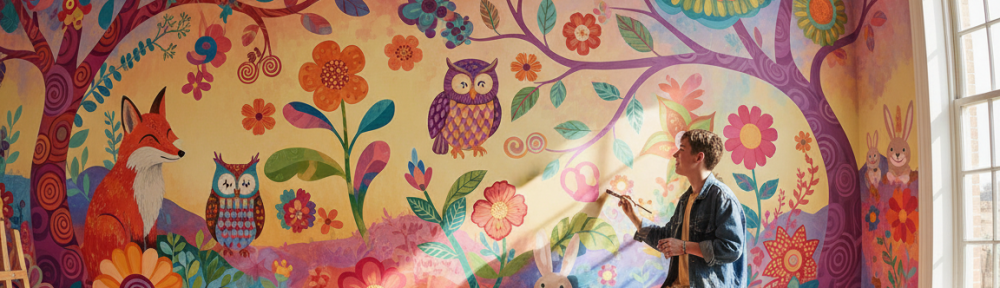
Think about reimagining a single wall to dramatically change your home’s atmosphere without taking on costly renovations. My goal is to show you the process of incorporating wall mural painting as a creative way to enhance any room’s personality and style. A mural can be made with paint, premium wall decals, or installed wallpaper. It can range from understated wall art decor to a show-stopping statement for the entire room.
Visit Website of Artist Mural
If you decide on a professional mural artist, whose services average around $4,800 nationally, or take the DIY route to save money, careful planning is key. I’ll walk you through the essential steps: from gathering references to selecting high-quality materials like premium acrylics. We’ll also discuss the differences between accent wall murals and those that cover the entire room. In doing so, you can ensure the mural artwork works perfectly within your space.
Key Takeaways
- Wall mural painting transforms rooms and can be done via paint, decals, or wallpaper.
- Accent wall murals and full-room murals offer different visual impacts and budgets.
- Hiring a mural artist averages around $4,800 nationally, but doing it yourself may save money.
- Strong planning through references, sketches, and materials improves the final mural artwork.
- Outdoor and patio murals extend your decorative wall art into exterior spaces.
Inspiring Wall Mural Painting Ideas For Every Space
I work with homeowners and designers to select the perfect wall mural painting approach. This involves considering the impact, budget, and space available. An accent wall mural can serve as a focal point, while a full-room mural transforms the entire atmosphere. The right choice should reflect the room’s function along with your maintenance and time expectations.
Accent Wall Murals Versus Full-Room Murals
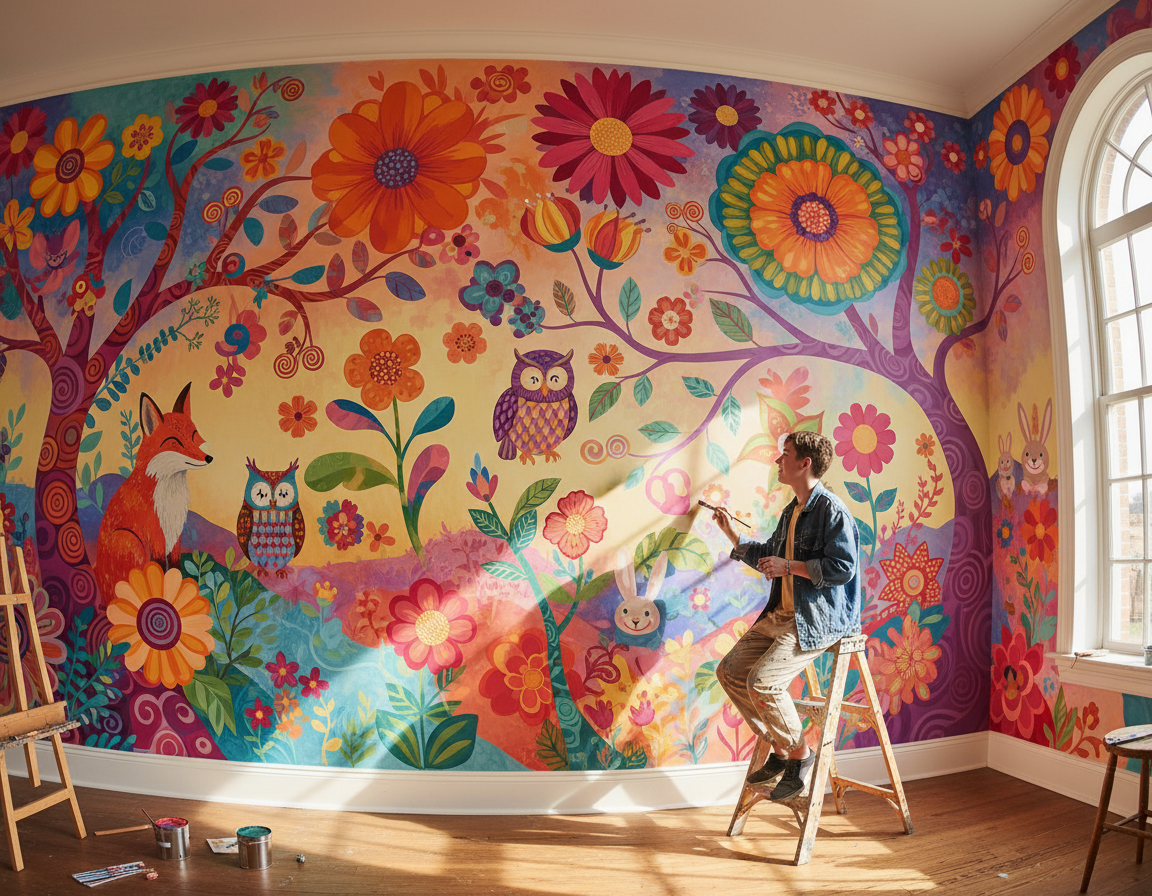
An accent wall mural is ideal for making a bold statement without overwhelming a space. It complements furniture and textiles, perfect for anchoring a living area or bedroom.
By contrast, a full-room mural offers a more immersive experience. It’s best for creating a cohesive scene, such as a woodland wrap in a nursery or a skyscape in a loft. This option comes with higher costs and requires more time for a custom design.
Indoor Mural Ideas: Nursery, Living Room, Kitchen, And Home Office
Murals for nurseries often use whimsical, stylized visuals. Choose simple shapes and soft color palettes to keep the space calm and age-appropriate.
In a living room, large wall art or oversized mural concepts can anchor seating areas. Be sure the mural scale fits the sofa or fireplace.
Graphic, hand-painted mural elements work especially well in kitchens and home offices. This approach adds life without visual clutter. Quick, bold shapes are efficient and easy to maintain.
Outdoor And Exterior Mural Concepts For Patios And Garden Walls
Exterior mural artwork extends living spaces into the landscape. Painted florals, tropical motifs, or subtle trompe-l’œil can tie patios to plantings.
For lasting results, use weather-rated paints and sealers. I plan composition around light, sightlines, and nearby hardscape to complement the yard year-round.
Large Wall Art And Oversized Mural Concepts To Make A Statement
Oversized mural work naturally commands attention and helps define public rooms or commercial spaces. Be sure to plan scaffolding, staging, and a simplified palette to better manage materials and time.
When scale grows, favor bold shapes and high-contrast areas over tiny realism. It reads well from a distance and stays visually coherent up close.
Hand-Painted Murals And Hand Painted Mural Styles: Graphic, Realistic, And Stylized
Hand-painted murals bring texture and a personal touch that printed wallpaper lacks. Graphic styles rely on clear lines and flat color, which work well in modern homes.
A realistic mural style takes more time and careful reference work. They work best for illusions or portraits when the budget allows for it.
Stylized hand-painted murals fall somewhere between graphic and realistic approaches. They make it possible to personalize the space with simplified forms and unique color choices that reflect the room and your style.
Planning Your Custom Mural Design And Budget
Each project begins with clear goals for scope, schedule, and visual result. Early decisions on design, materials, and whether to DIY or seek professional help are critical. This helps save time and prevents costly revisions down the road.
Collecting References And Researching Mural Design Ideas
I gather reference images from various sources like architecture, landscape photography, and established mural portfolios. Such references help connect the mural to the home’s aesthetic and the client’s preferences. I keep track of sources to communicate design decisions clearly to clients or household members.
Creating Sketches And Mockups To Present To Clients Or Household Members
I usually start with quick sketches before developing the best concept into a more detailed mockup. Wall chalk is helpful in the beginning because it creates guides that are easy to adjust and erase. Mockups ensure the mural’s scale, placement, and color are agreed upon before paint goes on the wall.
Cost Considerations: DIY Savings Versus Hiring Professional Mural Painters
I compare the costs of a DIY project with quotes from experienced mural painters and local companies. Professional rates typically range around $4,800, influenced by size, surface quality, and complexity. A DIY mural may be more affordable, though it often demands more time and carries a higher risk of uneven finishes.
Choosing Materials: High-Quality Acrylics, Primers, Sealers, And Tools
I recommend premium supplies such as Golden acrylics because they offer strong coverage and faster application. Be sure to budget for essentials like primer, sealers, painter’s tape, rollers, brushes, tarps, and projection or stenciling tools. Keeping careful expense records helps control project costs and reimbursements.
I plan the schedule with a buffer for drying, touch-ups, and client feedback. Thoughtful planning and practical budgeting ensure the mural delivers its full effect without unexpected issues.
Wall Mural Painting
I explain my mural process to help you create similar results. Careful preparation helps prevent problems later. I begin by cleaning the surface thoroughly, filling cracks, and sanding rough areas smooth. Before priming, I determine whether the mural will be an accent wall or cover the entire room.
Using rollers for the base coat helps maintain an even layer. It is an efficient method for large surfaces and gives the wall a consistent base color. I tape off outlets and trim with painter’s tape and cover floors with tarps to make cleanup easier after installation.
Moving the design onto the wall is a very important step. I use colored chalk for simple designs since it can be erased easily. For more complex layouts, I employ a projector at night or the grid method to ensure accurate scaling. Stencils are a major help whenever precise pattern repetition is needed.
On large walls, I begin by painting broad color areas to establish the composition’s structure. Then I build in midtones and darker values layer by layer. I focus on broad strokes first, saving detailed work for later to avoid wasting time and muddling the design.
I prefer high-quality acrylics for their excellent opacity and efficient coverage. Outdoor projects call for weatherproof primers, UV-resistant paints, and durable sealers that protect the mural from the elements.
Adding texture and highlights is the final step to enhance depth. Before the final protective topcoats, I test small areas to perfect glazing and brush techniques. In public or client spaces, I make sure drying times, scaffold access, and final cleanup are all scheduled in advance.
- Prep work: clean the wall, make repairs, prime, and base coat with rollers.
- Transfer methods: chalk, projection, grids, and stencils.
- Efficient workflow: block color first, layer gradually, and do not overwork the details.
- Finish: add texture, highlights, sealers, and consider mural installation logistics.
Mural Artist Tips, Tools, And Best Practices
I share practical advice drawn from both jobs and workshops. They touch on tools, time management, product recommendations, project logistics, and mural upkeep. They can help you work more effectively while protecting your mural for years to come.
Essential Tools
I work with a simple tool kit that includes brushes for detail and edges, rollers for large areas, painter’s tape, floor tarps, and ladders or scaffolding when needed. I recommend stocking multiple roller sizes and synthetic brushes that hold acrylics well.
Time Management And Workflow
I plan milestones and add buffer time. Large walls usually require more time than the sketches make it seem. I divide the work into focused sessions and avoid overworking any single area. On long days, podcasts and instructional videos help me stay productive and focused.
Product Recommendations
I select high-quality acrylics like Golden because they provide excellent opacity and quicker coverage. Better paint means fewer layers and fewer touchups, saving valuable time. I recommend keeping an inventory log for paints, rollers, and brushes so invoicing stays clear.
Project Logistics
I keep track of hours, receipts, and any scope changes. Clear timelines and mockups help prevent misunderstandings with clients or household members. When pricing, I compare my work to national averages and remember to value experience when quoting a mural painting company or a solo mural artist.
Safety And Mural Maintenance
I make safety a priority by using harnesses and guardrails on scaffolding and securing tarps against slips. On outdoor projects, I apply UV-resistant sealers and advise clients to use gentle cleaning methods. Regular touchups and a maintenance plan extend longevity and protect the original intent of the piece.
Working With Clients And Teams
- I communicate progress using clear notes and simple photos.
- I maintain a log of project logistics so billing remains transparent.
- I clarify care steps and limitations so clients know how to maintain the mural properly.
From my experience, these practices improve results on residential and commercial projects alike. Whether you work with mural painters, run a mural painting company, or hire professional mural services, clear tools, time plans, and maintenance guidance make every project smoother.
Conclusion
Wall mural painting can dramatically transform a room, whether it is a small accent wall or a large hand-painted mural that defines the space. Whether you decide to paint it yourself or hire professionals, planning remains essential. It involves gathering design ideas, setting a realistic timeline, and budgeting wisely. Professional costs can range from $4,800, so consider the value of expertise against the cost savings of a DIY project.
Effective mural installation begins with thorough preparation. It helps to gather references, create mockups or sketches, and choose durable materials. Acrylics such as Golden are well suited for indoor and outdoor use. When painting outdoor murals on patios or garden walls, use paints and sealers designed to handle different weather conditions.
It is also important to keep detailed expense records and maintain open communication with clients or family members. Fair pricing and allowing extra time can help prevent mistakes. With thoughtful planning, good tools, and attention to detail, the finished mural can become a long-lasting piece of decor that highlights your personal style and dedication.